
what is gtm
What is gtm
For financial institutions, GTM is not just about promoting their services; it’s about building a strong brand reputation and establishing trust with customers. In an industry where security and reliability are paramount, a solid GTM strategy involves implementing robust security measures, educating customers about the benefits of their services, and providing exceptional customer support https://paintpulse.co.uk/revolutionizing-business-processes-with-aisdr/.
Marketing plan: Create a comprehensive omnichannel marketing plan that integrates traditional and digital channels. Use sophisticated attribution models to understand the impact of each channel on customer acquisition and retention.
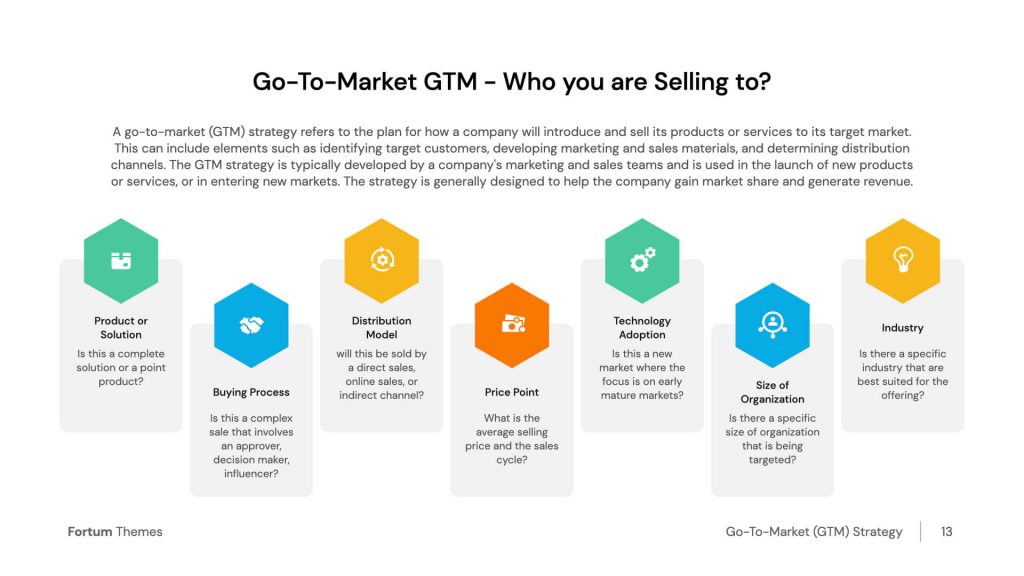
The customer is the centerpiece of any marketing strategy. Whether you are bringing a new product to market or refreshing an existing one, it is imperative that you first research and identify the target market that will be most interested in purchasing it.
B2b gtm consulting drives everythingnew market penetration
When it comes to measuring success in GTM initiatives, it’s crucial to focus on both quantitative and qualitative metrics. In today’s data-driven world, companies have access to a lot of things that can help them gauge their performance. However, it’s not just about numbers; understanding the full-time impact on customer success and brand business is equally important.
In today’s markets, B2B teams need flawless execution. Whether you want to transform your go-to-market approach, enable your sales teams to hit this year’s number, or simply run tighter sales ops processes, we can show you how.
Looking back a few years ago, the shift towards digital transformation was a major challenge. Now, it’s a given in the business world. What’s important is how businesses use this to their advantage, ensuring all sales customer interactions are optimized for growth. The kind of flexibility that digital tools offer will be pivotal as companies navigate these changes.
Inbound GTM strategy focuses on attracting customers through content creation, search engine optimization (SEO), and social media marketing. This approach aims to draw potential customers in naturally by offering valuable information and solutions that address their pain points. By positioning the company as a trusted resource and thought leader in its industry, inbound GTM strategies can effectively convert website visitors into leads and customers through a nurturing process based on their engagement and interests.
Best Practices: Conduct thorough research to understand the strengths and limitations of each distribution channel. Invest in channel-specific marketing tactics such as SEO optimization for online channels and relationship-building for offline channels.
What is gtm
Before we dive deeper into what Google Tag Manager is, let’s take a quick look at the world we used to live in (a.k.a. “without tag management”). Whenever you want to install Google Analytics or some other web tracking tool, it prompts you to add a piece of their JavaScript code (a.k.a. tag) on your website. Pretty standard, right?
Hand over these two snippets to a developer and ask him/her to carefully follow the instructions (the first code should be added somewhere in the
of a website, while the second should be added right after the opening tag).Great! Before we start celebrating your first tag, we need to check whether that data actually reached Google Analytics (because the fact that the tag was fired does not mean that data was properly sent. For example, a tag may be incorrectly configured and send page views to the wrong GA property).
Click Create. The next step to complete is to configure your first data stream. It is a data source from which events will be sent to your Google Analytics 4 property. You can have multiple data sources in a single property. For example, three web properties, 1 for Android app, and 1 for an iOS app.
Event tracking While Google Analytics can track basic user interactions, GTM allows you to get much more granular with event tracking. For example, you could track specific button clicks, video plays, or file downloads as events and pass data about the event into Google Analytics.
#1. Does Google Tag Manager work only with Google Products? No. Google Tag Manager plays well with a lot of platforms/tools. It offers a wide range of predefined tag templates (like Google Analytics, HotJar, Twitter Universal Tag, etc.). Additionally, you can add custom codes with the help of a Custom HTML tag.